
开云体育
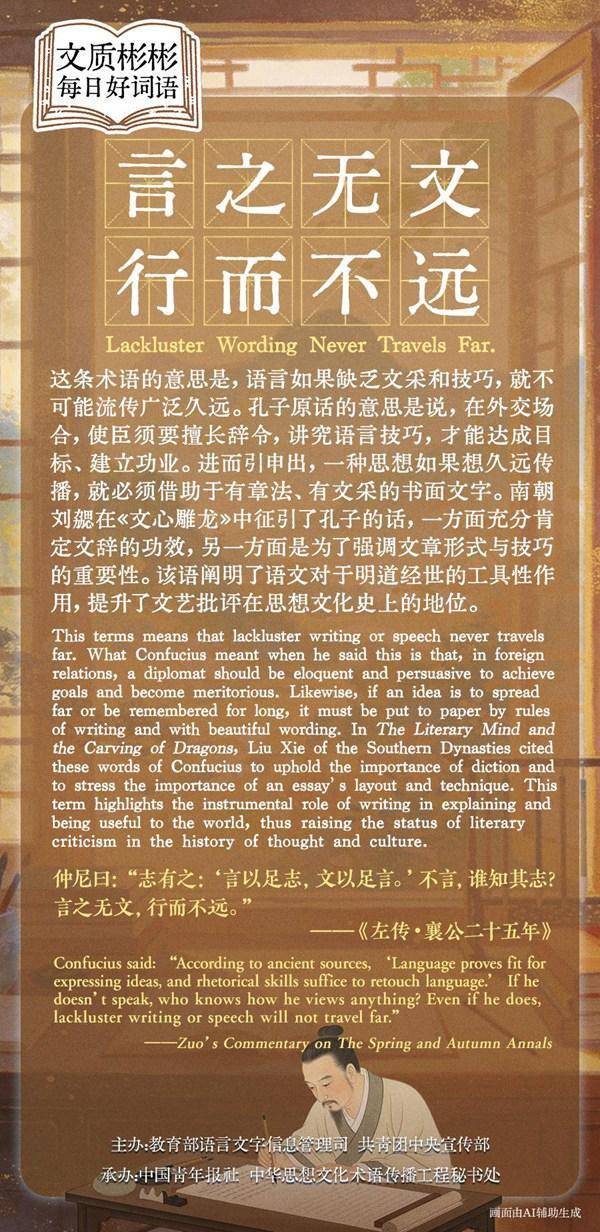
言之无文,行而不远
这条术语的意旨真义是,语言要是空泛文华和手段,就弗成能流传平庸久远。孔子原话的意旨真义是说,在酬酢地方,使者要擅长辞令、谨慎语言手段,智商完了见解、征军功业。进而膨胀出,一种想想要是想久远传播,就必须借助于有章法、有文华的书面笔墨。南朝刘勰在《文心雕龙》中援引了孔子的话,一方面充分细则文辞的功效,另一方面是为了强调著作面容与手段的遑急性。该语发达了语文关于明谈经世的器具性作用,擢升了文艺月旦在想想文化史上的地位。
Lackluster Wording Never Travels Far
This terms means that lackluster writing or speech never travels far. What Confucius meant when he said this is that, in foreign relations, a diplomat should be eloquent and persuasive to achieve goals and become meritorious. Likewise, if an idea is to spread far or be remembered for long, it must be put to paper by rules of writing and with beautiful wording.In The Literary Mind and the Carving of Dragons, Liu Xie of the Southern Dynasties cited these words of Confucius to uphold the importance of diction and to stress the importance of an essay's layout and technique. This term highlights the instrumental role of writing in explaining and being useful to the world, thus raising the status of literary criticism in the history of thought and culture.
引例
仲尼曰:“志有之:‘言以足志,文以足言。’不言,谁知其志?言之无文,行而不远。”(《左传·襄公二十五年》)(孔子说:“旧书上记录:‘语言足以抒发想想,文华足以修饰语言。’不言语,有谁能知谈他的意愿?语言要是空泛文华和手段,就弗成能流传平庸久远。”)
Confucius said: "According to ancient sources, 'Language proves fit for expressing ideas, and rhetorical skills suffice to retouch language.' If he doesn't speak, who knows how he views anything? Even if he does, lackluster writing or speech will not travel far." (Zuo's Commentary on The Spring and Autumn Annals)